
Event Conference
Understanding the landscape of climate finance, debt, tax and illicit financial flows and human rights | HRC58 Side Event
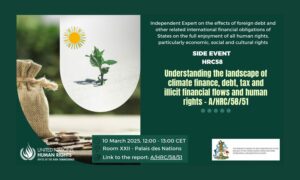
10 Mar 2025
12:00 – 13:00
Venue: Palais des Nations | Room XXII
Organization: Special Procedures of the UN Human Rights Council, The Bahamas
This side event to the 58th session of the Human Rights Council aimed to deepen discussions around the content of her thematic report, “Understanding the landscape of climate finance, debt, tax and illicit financial flows and human rights”, including the recommendations therein. This side event was co-sponsored by the Permanent Mission of the Commonwealth of the Bahamas to the United Nations Office and other international organizations in Geneva.
About this Event
Climate finance has become a central pillar in global climate governance, particularly under frameworks such as the Paris Agreement. The goal in the Paris Agreement of limiting global temperature rise to 1.5 °C above pre-industrial levels to avoid catastrophic climate impacts highlights the critical role that financial flows play in achieving these targets. Grounded in the principle of common yet differentiated responsibilities, with developed countries expected to provide the bulk of financial resources to developing States, climate finance reflects the historical role of developed countries in emitting greenhouse gases and their greater capacity to mobilize resources.
Climate finance is not only a tool for addressing climate change but also an essential component for fulfilling international human rights obligations. It helps support the most vulnerable populations and provides the necessary resources for implementing solutions that can alleviate the adverse effects of climate change, such as rising sea levels, extreme weather events and food insecurity.
Climate finance is also essential for enabling low-carbon development pathways, supporting countries in building resilience to climate impacts and facilitating the transition to renewable energy systems. However, funding has been insufficient to meet the scale of the crisis and the financial resources needed. As the United Nations Framework Convention on Climate Change highlights, the financial need to mitigate and adapt to climate change in developing countries is far higher than current levels of investment.
In this context, the UN Independent Expert on foreign debt and human rights, Ms. Attiya Waris, dedicated her thematic report “Understanding the landscape of climate finance, debt, tax and illicit financial flows and human rights” (A/HRC/58/51) to the subject of climate finance, aiming to take stock of ongoing global discussions on climate finance through a human rights lens and while exploring solutions to scale up climate finance effectively.
The UN Independent Expert on foreign debt and human rights convened a side event to deepen discussions around the content of her thematic report, including the recommendations therein. This side event was co-sponsored by the Permanent Mission of the Commonwealth of the Bahamas to the United Nations Office and other international organizations in Geneva.
Environment @ HRC58
The 58th Regular Session of the Human Rights Council (HRC58) is taking place in Geneva from 24 February to 4 April 2025. This regularly-updated page highlights the environmental-related activities of this session.

Speakers
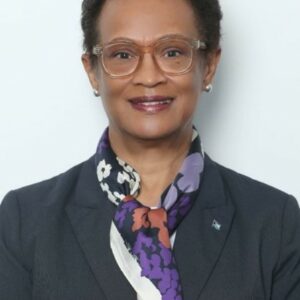
H.E. Amb. Patricia Ann HERMANNS
Permanent Representative of the Commonwealth of the Bahamas to the UN Office and other international organizations in Geneva

Attiya WARIS
UN Independent Expert on foreign debt and human rights | Moderator

Alena DOUHAN
UN Special Rapporteur on the negative impact of the unilateral coercive measures
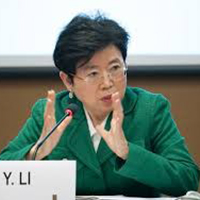
Yuefen LI
Senior Adviser, South Centre

Lien VANDAMME
Senior Campaigner, Climate & Energy Program, Center for International Environmental Law
Highlights
Participation
This side event is open to registered participants of the 58th session of the Human Rights Council. More details are available on Indico.